

This year’s World Cup, with a larger 48-team format for 2026, has brought about more excitement, with more nations and encounters putting coaches to the test. The international football game plan narrative is obvious: teams are quickly making the leap to the tactical level of elite squads.
It is important to understand these changes for any World Cup punter making World Cup predictions, as tournament margins are determined by pressing triggers, rest defence and substitutions. If you are a bettor looking to match the hype, you can check the comparison tool for your World Cup bets to help you narrow down selections in a professional manner.
This World Cup tactical analysis examines 2026 tactics and reveals how contenders are adjusting.
The changing landscape: Why international tactics are evolving faster than ever
It’s a new format, 12 groups of four, where the top two from each group plus the eight best third-placed teams advance to the Round of 32. Coaches will have to travel, deal with heat and handle an additional knockout round. Busy club schedules are important. National teams should have flexible tactics, enabling tired players to change to mid-blocks, rotate players and alter pressing intensity.
Club culture has developed into a global lifestyle. Inverted full-backs, box midfields, positional play, pressing all look to be featured in camps, albeit in a simplified format to allow for less preparation.
Key tactical trends to watch for 2026
The rise of hybrid systems & positional fluidity
A hybrid system is not a gimmick! A team may attack in a 3-2-5, defend in a 4-4-2 and build from a 4-3-3. England could therefore play with a counter-attack midfield where Bellingham and Elliott are playing with multiple threats to the centre, and Declan Rice acts as a stabiliser, holding up counters. France have the ability to adapt to a different position for Mbappé with either a wide or deep starting for the playmaker. This versatility allows tournament teams to “work around” various opponents without having to alter the lineup.
Defensive philosophies: The high-press vs. the pragmatic mid-block
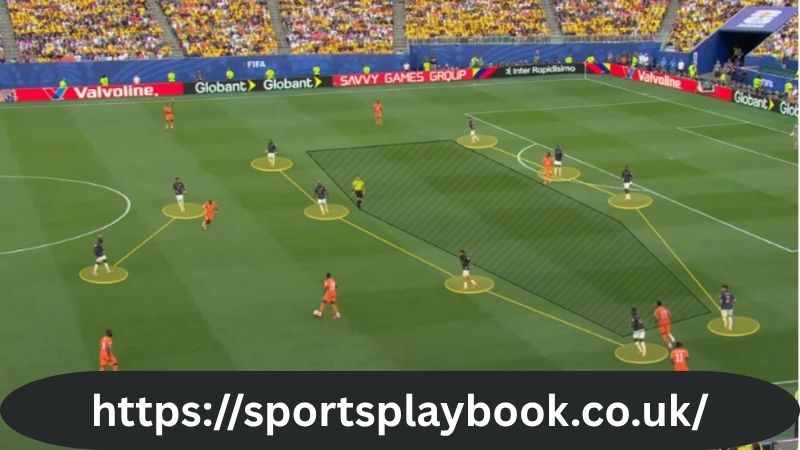
Spain and Germany demonstrate how pressing can suffocate opponents and generate quick attacks off turnovers. The risk is physical: performing repeated sprints may be difficult during the summer months and may result in the creation of space behind the back line. The Morocco 2022 run has shown that it’s possible to run the other way. A short mid-block can stop a ball up the middle of the court, allow it to bounce around innocently and then come back out with quick wide players. Selection is based on the philosophy: athletic forwards are needed by pressing teams and discipline is valuable to mid-block teams.
The evolving roles: Inverted full-backs and the modern ‘number 10’
Full-backs are no longer only overlapping machines. Many step in as auxiliary midfielders in possession to provide security against counters, and free wingers from having to drop low. Ten is also no longer the same. Jude Bellingham and Jamal Musiala are no luxury playmakers, just pressers, scorers, ball-carriers and box-creepers. These jobs will change England’s tactical formation or Germany’s attacking balance.
Case studies: How the 2026 favourites are adapting
France: Blending pragmatism with a new generation
Security remains the cornerstone of France national team tactics. Didier Deschamps trusts defensive structure, but Tchouaméni and Rabiot allow France to switch between control and direct transitions. Mbappe is still the key through-put in the system: France tend to develop with him loose to get him out quickly, get second balls out and to isolate defenders and let runners attack. The question is whether there can be any creativity when the opposing team is defending low.
Argentina: Evolving beyond the 2022 champions
Argentina have an emotional and a tactical problem: how to find a way to not rely on Messi in particular, while maintaining tempo control. Lionel Scaloni has relied on a pragmatic approach, slight spacing, and fluid forwards. With pressing legs, central combinations and penalty-box threat, Argentina’s football system is represented by Julián Álvarez, Lautaro Martínez, Enzo Fernández and Alexis Mac Allister. They have proven themselves to be able to win close matches even without Messi’s magic.
Brazil, England & the pack: Finding a winning formula
The Brazil national team still boasts top quality one-v-one in Vinícius Júnior, the flair of Raphinha and Rodrygo, but balance is the issue: will midfield support be sufficient for the attack? The problem facing England is just as acute. Bellingham, Foden, Saka, Kane and Rice are all of tremendous quality but spacing them into one cohesive tournament system is the challenge. Morocco is still a dark horse as their small size, speed and belief are proven.
From the pitch to the payout: How tactical insight shapes smarter bets
A helpful World Cup betting guide isn’t limited to form tables. Tactical matchups count: a high defensive line could be useful in the game against Spain, while one that is more geared toward pressure might work for Mbappé or Vinícius. You can use a World Cup comparison tool, but the real advantage is to ask why systems conflict. Start researching with the team and then assess the odds based on structure, roles and adaptability.